
A THEATRE OF WATER
Okavango: The Theatre of Water
By Charlie Summers
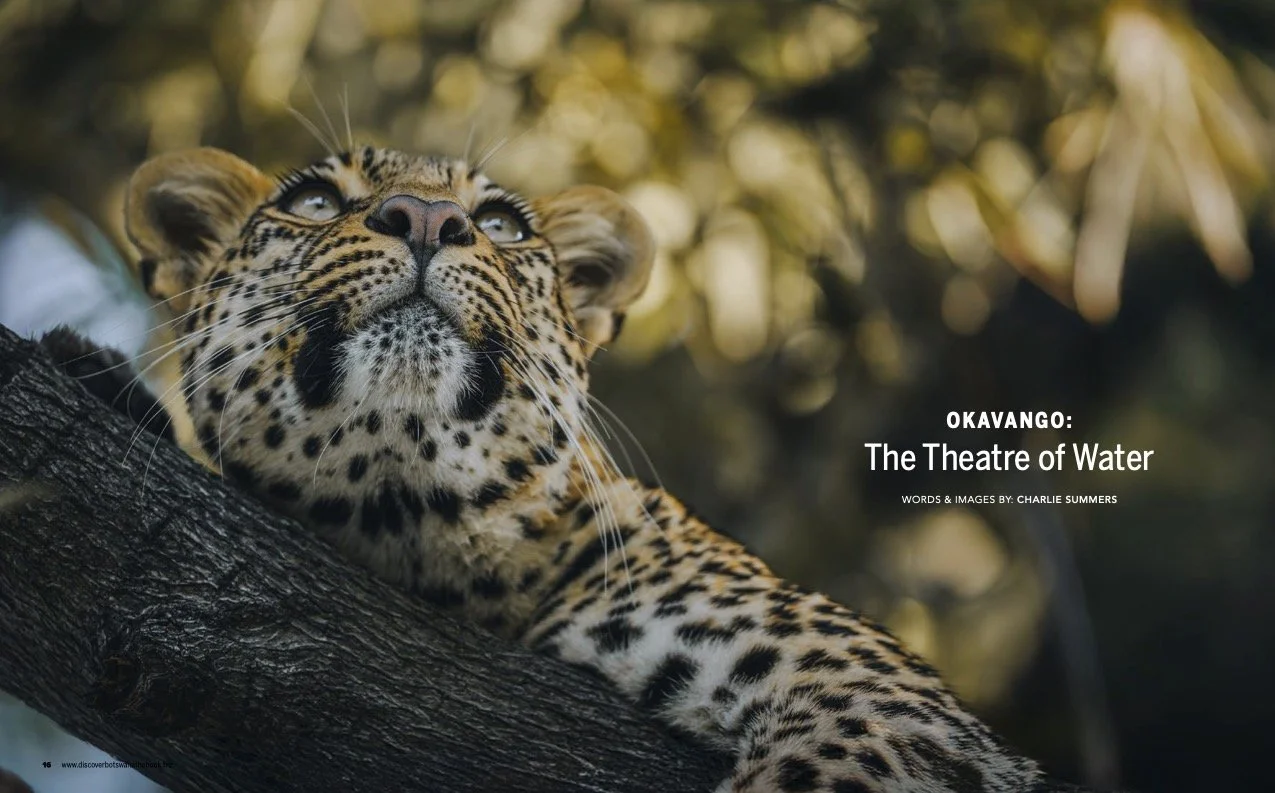
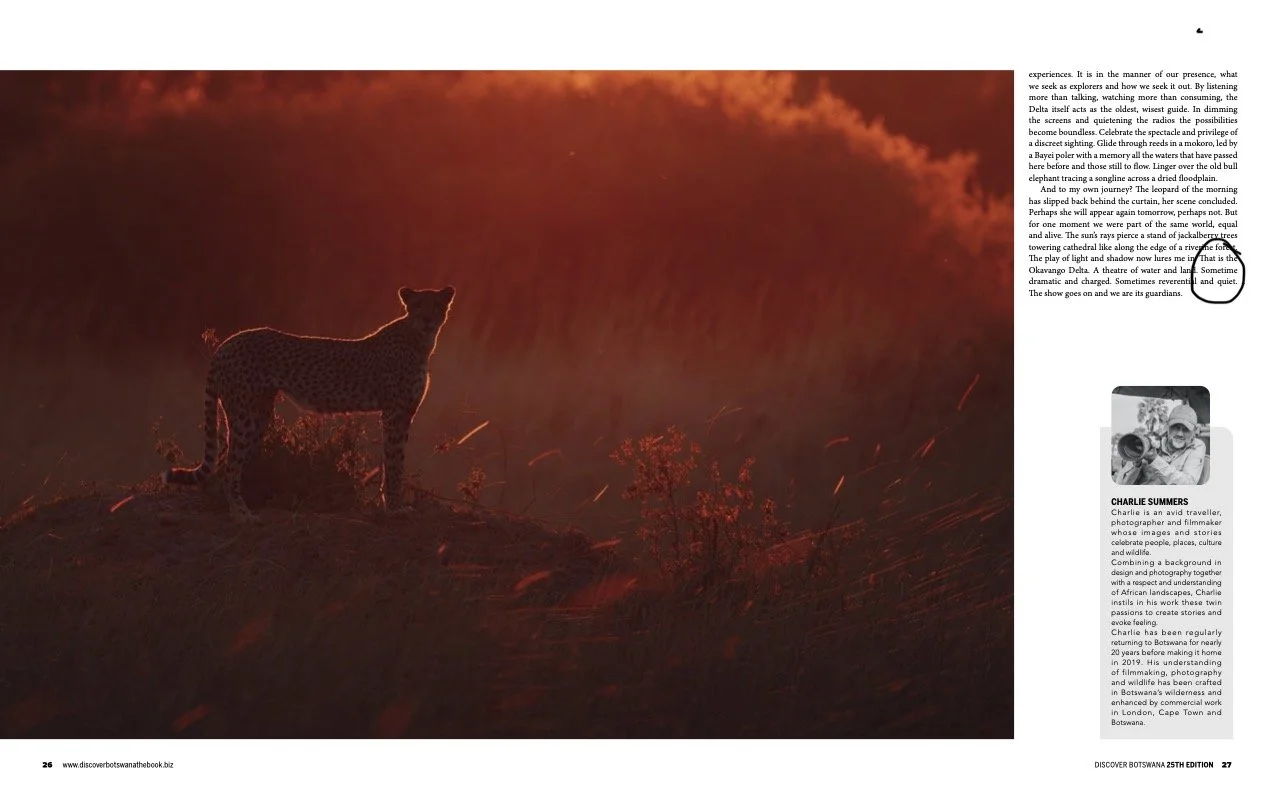
The first light of dawn spills over the Okavango Delta, painting the floodplains a quiet gold. Tall Motshikiri grasses motionless in the hush of morning. Like theatre curtains parting, the grass is disturbed and droplets of dew fall from the stems. Their fall to earth arrested by the rosette patterned fur of a leopard. A fluid arrangement of loose limbs, capable of moulding perfectly to the demands of concealment. This morning she pauses, surveying her audience. Her performance a mixture of wariness and indifference.
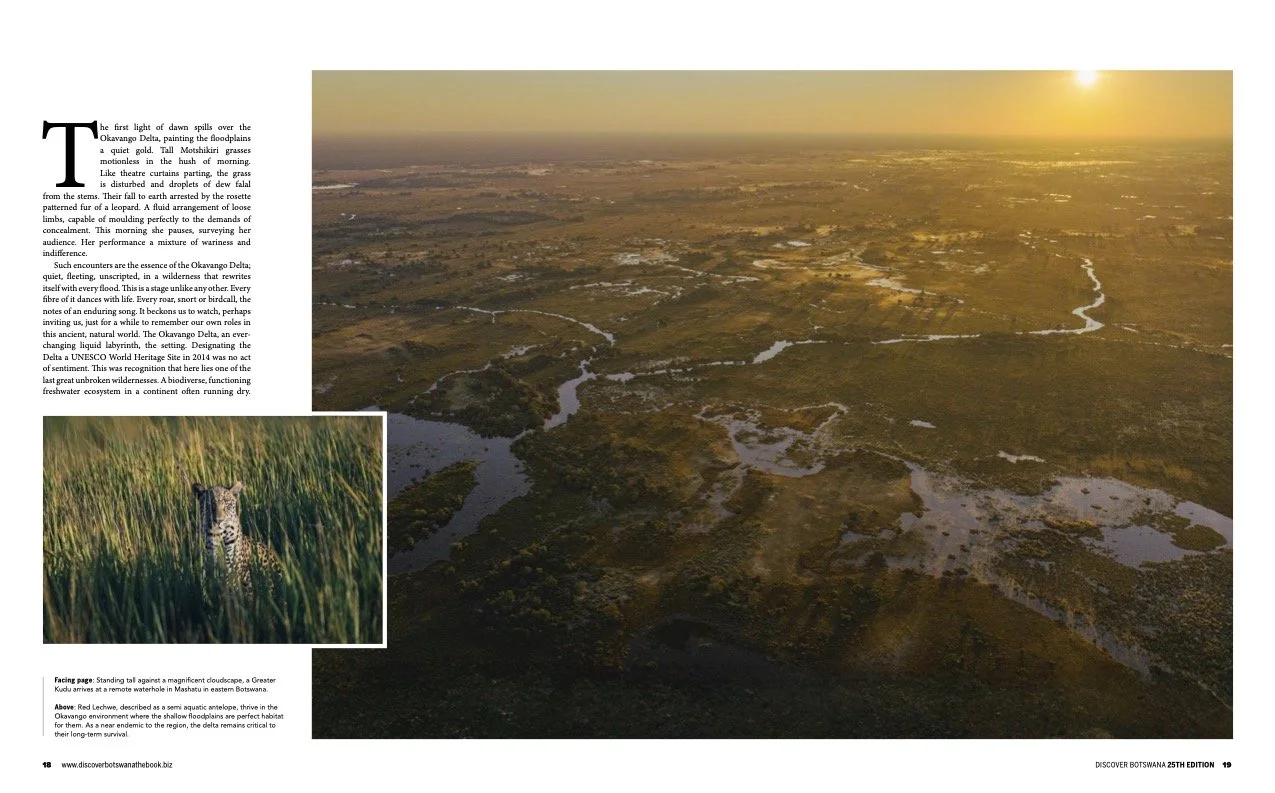
Such encounters are the essence of the Okavango Delta; quiet, fleeting, unscripted, in a wilderness that rewrites itself with every flood. This is a stage unlike any other. Every fibre of it dances with life. Every roar, snort or birdcall, the notes of an enduring song. It beckons us to watch, perhaps inviting us just for a while, to remember our own roles in this ancient, natural world. The Okavango Delta, an ever-changing liquid labyrinth, the setting. Designating the Delta a UNESCO World Heritage Site in 2014 was no act of sentiment. This was recognition that here lies one of the last great unbroken wildernesses. A biodiverse, functioning freshwater ecosystem in a continent often running dry. The annual floodwaters, born months earlier in distant rains, arrive in slow, unpredictable waves that dictate the cycle of every living thing. Water and wilderness dance a slow waltz, changing step with the seasons.
The Okavango Delta is a place of constant flux. Of water where there should be none. Of islands birthed from the mouths of seemingly insignificant termites. Where animals and travellers alike are forced to sway to the will of water. It flows into the Kalahari Desert, and there it spreads, over weeks, months, in a vast fan of channels and lagoons. Eventually passing into seasonal river systems that flow perpendicular to the Delta’s natural flow. And then the water simply fades. Flowing not into sea or lake, but into sand over 200m deep in parts. Surrendering itself to the arid landscape it vanishes, like a conjuror’s scarf drawn through a closed fist.
The best way to know the Okavango is to listen to its rhythm. To watch, quietly and with subservience to creatures great and small that reign here. This is a place ruled not by clocks or calendars but by a pulse of water that beats across the twelve months. While there is no beginning or end to this cycle, the Okavango waters can be traced back to the Angolan highlands, where summer rains fall in torrents through January and February. The Cubango and Cuito rivers, swollen and restless, begin their slow pilgrimage south over the following months.
In the Delta, every month of the year heralds a change in the land and climate. Water, as ever, the central character. To travel here is to step onto a wheel endlessly rotating, glimpse its arc for a moment and borrow a few beats of the pulse. By March and April, while the Angolan waters are already on the move, the Delta itself is becoming parched. The previous year’s floods have long receded and the annual local rains have all but stopped. In Maun, the historic gateway town, dust blows across the roads and thermals send Marabou stork soaring. The town and the Delta waits. A strange anticipation that teaches a patience at odds with the drumbeat of modern life. Knowing the flood is coming, willing it forward, hearing tales of its progress and yet ultimately waiting.
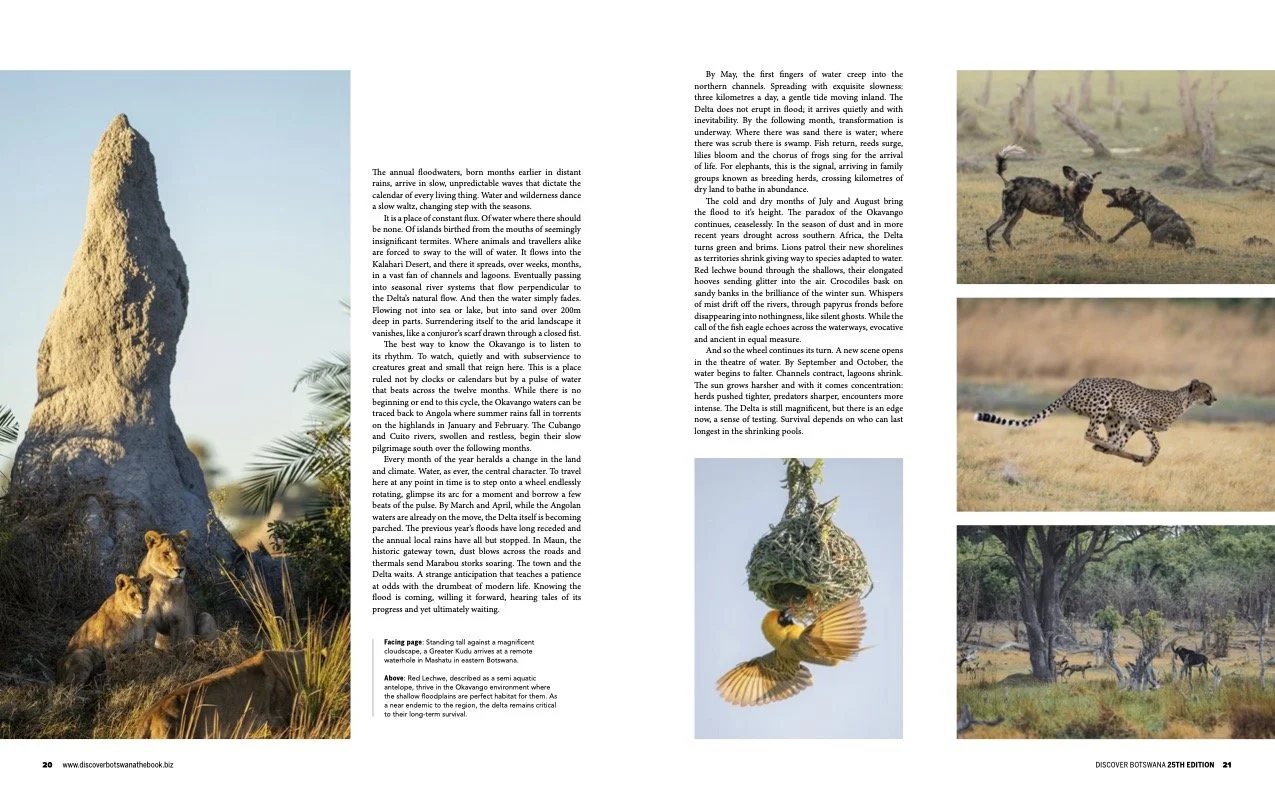
By May, the first fingers of water creep into the northern channels. Spreading with exquisite slowness: three kilometres a day, a gentle tide moving inland. The Delta does not erupt in flood; it arrives quietly and with inevitability. By the following month, transformation is underway. Where there was sand there is water; where there was scrub there is swamp. Fish return, reeds surge, lilies bloom and the chorus of frogs sing for the arrival of life. For elephants, this is the signal, arriving in family groups known as breeding herds, crossing kilometres of dry land to bathe in abundance.
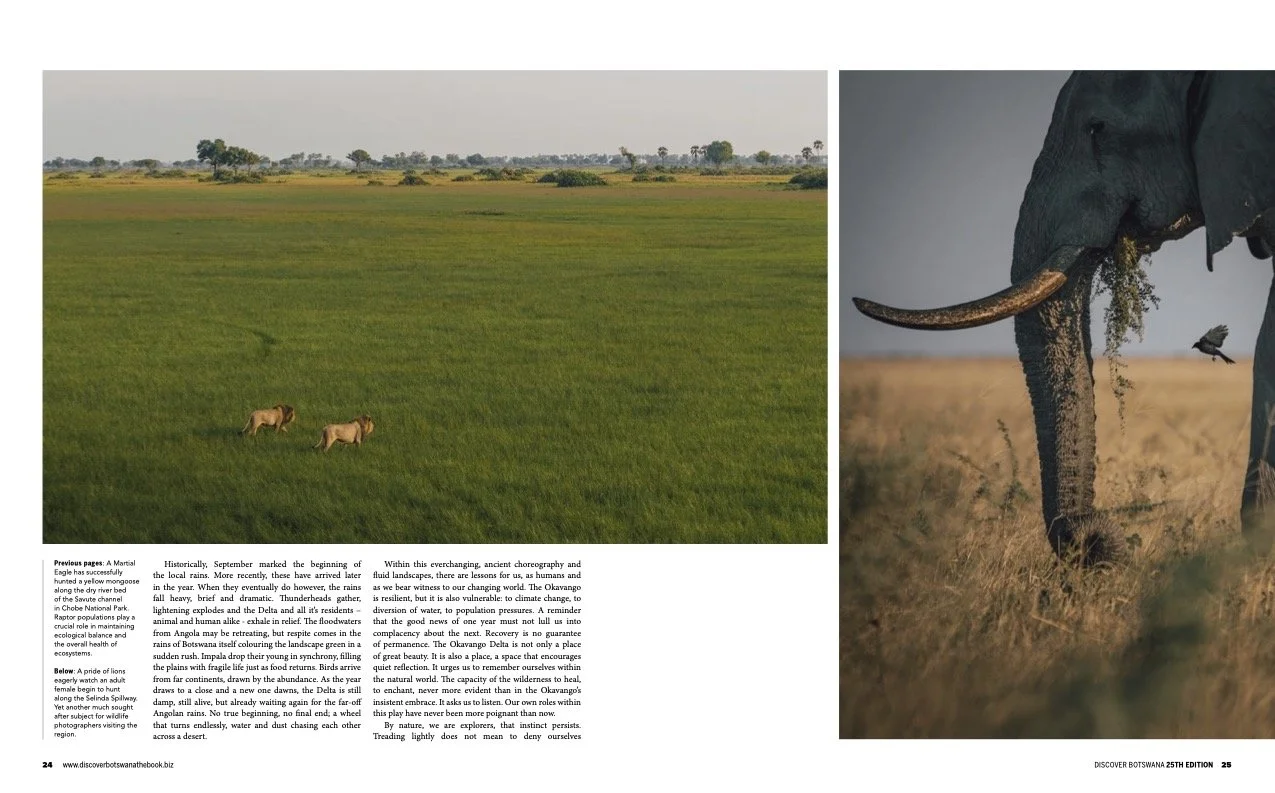
The cold and dry months of July and August bring the flood at its peak. The paradox of the Okavango Delta continues, ceaselessly. In the season of dust and in more recent years drought across Southern Africa, the Delta waterways turn green and brim. Lions patrol their new shorelines as territories shrink giving way to species adapted to water. Red lechwe bound through the shallows, their elongated hooves sending glitter into the air. Crocodiles bask on sandy banks in the brilliance of the winter sun. Whispers of mist drift off the rivers, through papyrus fronds before disappearing into nothingness, like silent ghosts. While the call of the fish eagle echoes across the channels, evocative and ancient in equal measure.
And so the wheel continues its turn. A new scene opens in the theatre of water. By September and October, the water begins to falter. Channels contract, lagoons shrink. The sun grows harsher and with it comes concentration: herds pushed tighter, predators sharper, encounters more intense. The Delta is still magnificent, but there is an edge now, a sense of testing. Survival depends on who can last longest in the shrinking pools.
Historically, September marked the beginning of the local rains. More recently, these have arrived later in the year. When they eventually do however, the rains fall heavy, brief and dramatic. Thunderheads gather, lightening explodes. The Delta and all its residents – animal and human alike - exhale in relief. The floodwaters from Angola may be retreating, but respite comes in the rains of Botswana itself, colouring the landscape green in a sudden rush. Impala drop their young in synchrony, filling the plains with fragile life just as food returns. Birds arrive from far off continents to a land of plenty. As the year draws to a close and a new one dawns, the Delta is still damp, still alive, but already waiting for the far-off Angolan rains. No true beginning, no final end; a wheel that turns endlessly, water and dust chasing each other across a desert.
Within this everchanging, ancient choreography and fluid landscape, there are lessons for us, as human beings and as we bear witness to our changing world. The Okavango Delta is resilient but it is also vulnerable: to climate change, to diversion of water, to population pressures. A reminder that the good news of one year must not lull us into complacency about the next. Recovery is no guarantee of permanence. This is not only a place of great beauty. It is also a space that allows, indeed encourages, quiet reflection. It urges us to remember ourselves within the natural world. The capacity of the wilderness to heal, to enchant, never more evident than in the Okavango’s insistent embrace. Asking us to listen. Our own roles within this play have never been more poignant than now.
By nature, we are explorers, that instinct persists. Treading lightly does not mean to deny ourselves experiences. It is in the manner of our presence, what we seek as explorers and how we seek it out. By listening more than talking, watching more than consuming, the Delta itself acts as the oldest, wisest guide. In dimming the screens and quietening the radios the possibilities become boundless. Every breaking of dawn presents new discoveries. Every tree tells a tale. Every rustle of grass an opportunity. Bask in the spectacle and privilege of a quiet, discreet sighting. Glide through reeds in a mokoro, led by a Bayei poler with a memory of all the waters that have passed before and those still to flow. Linger over the old bull elephant tracing a songline across a dried floodplain.
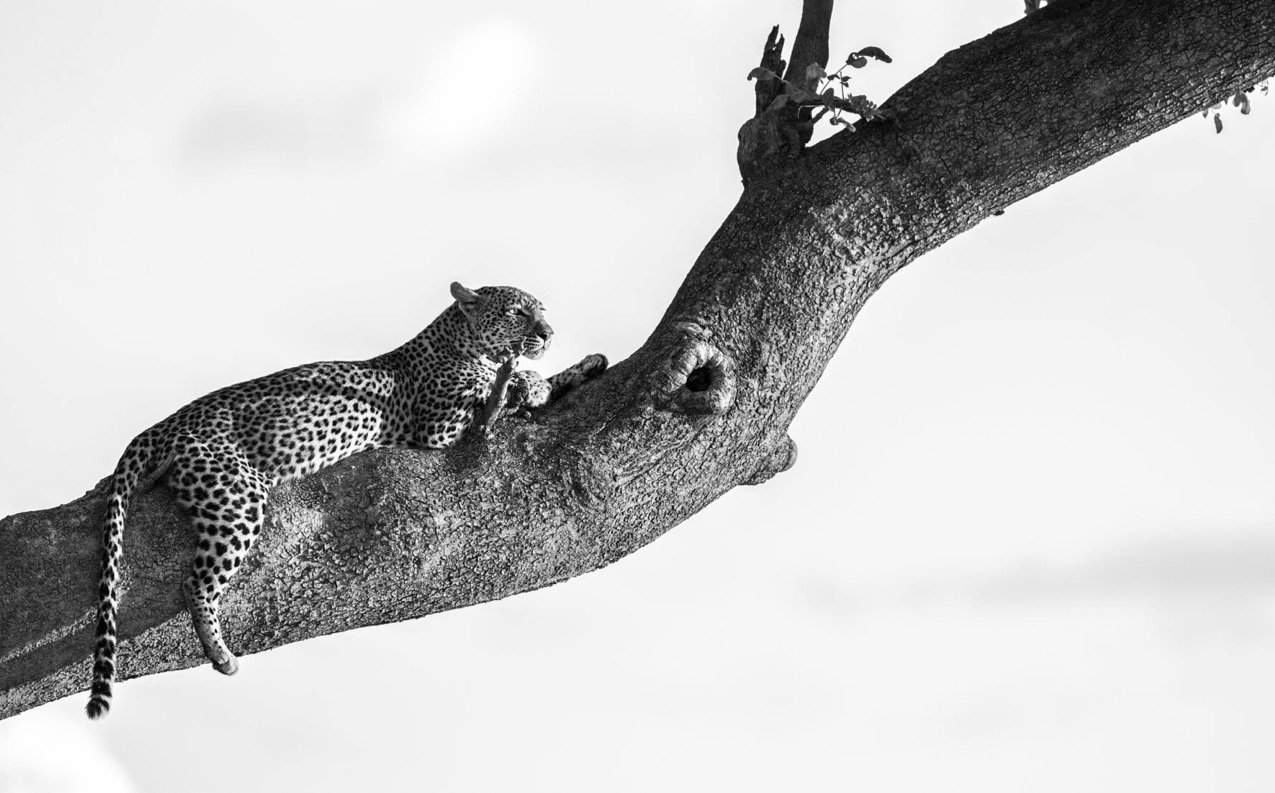
And to my own journey? The leopard of the morning has slipped back behind the curtain, her scene concluded. Perhaps she will appear again tomorrow, perhaps not. But for one moment we were part of the same world, equal and alive. The sun’s rays pierce a stand of jackalberry trees towering cathedral like along the edge of a riverine forest. The play of light and shadow now lures me in. That is the Okavango Delta. A theatre of water and land. Sometime dramatic and charged. Sometimes reverential and quiet. The show goes on and we are not just spectators but its most privileged guardians.